
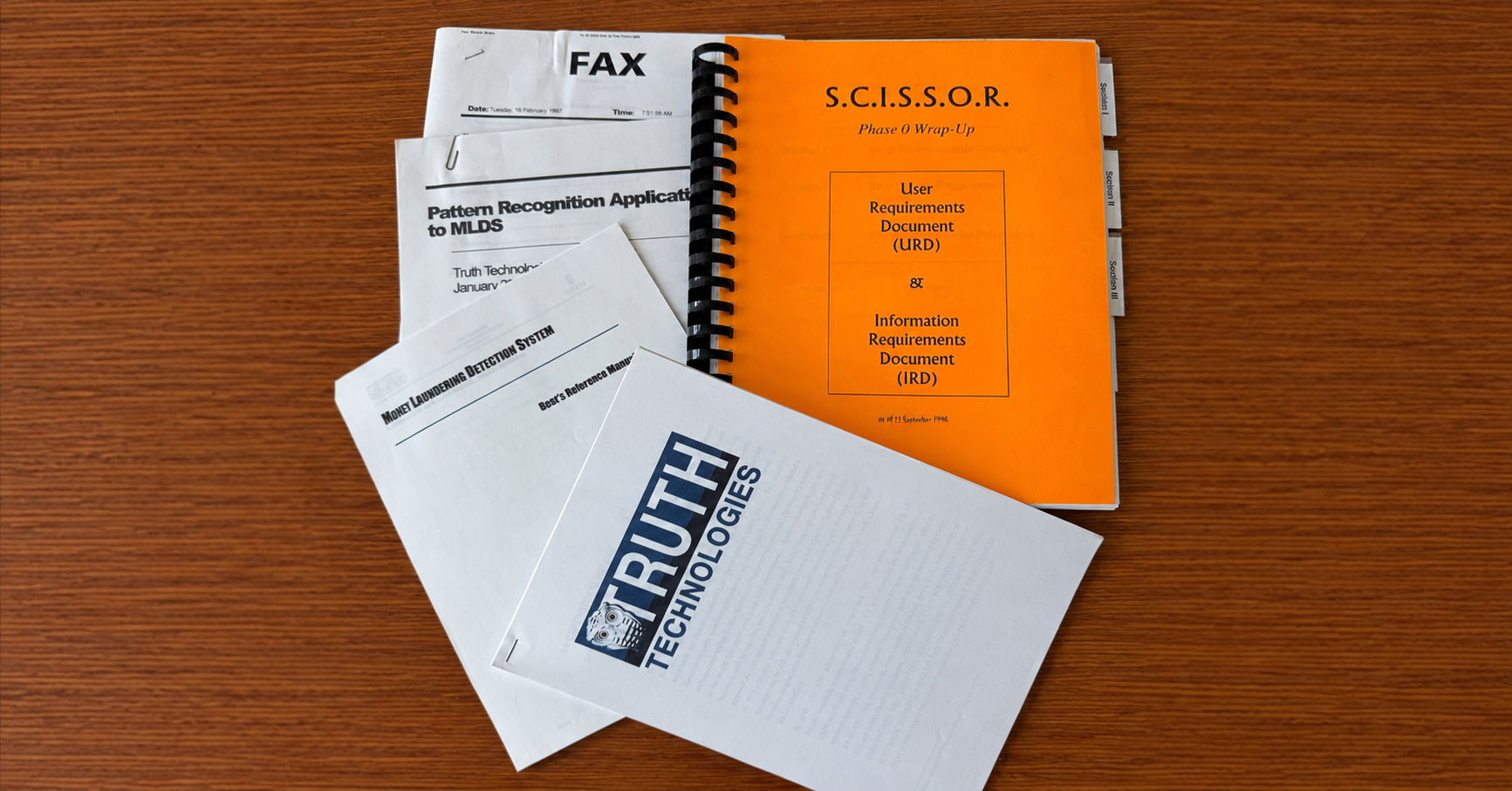
On November 15, 2026, Truth Technologies turned 30.
Thirty years is a long time for an independent software company, especially in a field that barely existed when we started: technology-driven financial crime compliance.
Our beginnings weren't conventional. Truth Technologies wasn't born in Silicon Valley or funded by venture capital. It traces back to a steel crisis in Luxembourg, an unexpected meeting with American defense technology, and an idea that needed a home.
Truth Technologies at a glance
- Founded
- November 15, 1996, in Vienna, Virginia
- Founder
- Egide Thein, former Chief of Staff to the Crown Prince of Luxembourg
- Headquarters
- Naples, Florida
- Flagship platform
- Sentinel™, for AML, KYC, and sanctions screening
- Status
- Independent for 30 years
Luxembourg, 1975: Where the Story Begins
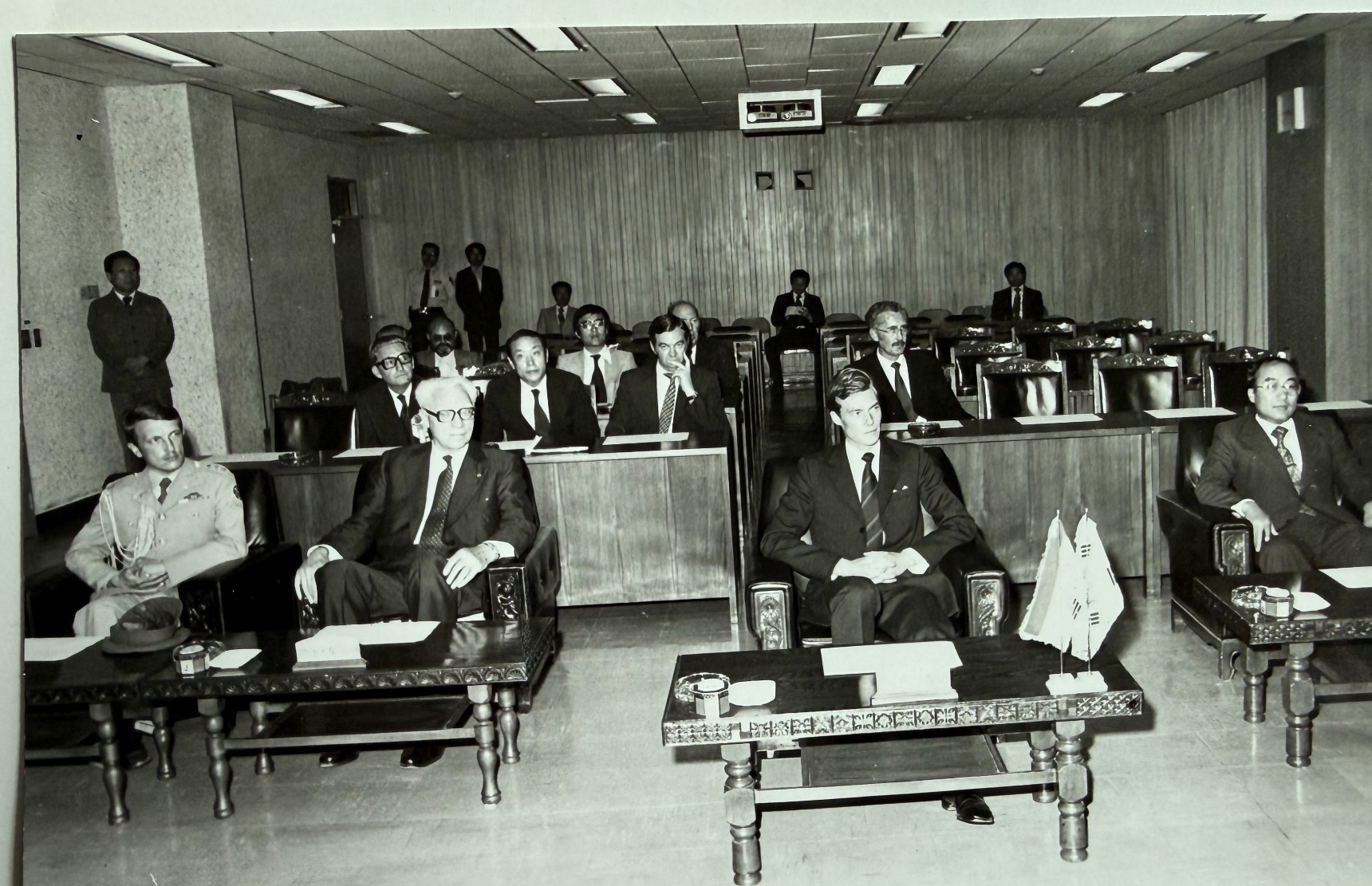
In 1975, Egide Thein was appointed Chief of Staff to the Crown Prince of Luxembourg, at a difficult moment for the country. About a quarter of Luxembourg's workforce was tied to the steel industry, and a collapse in international steel markets threatened the foundation of its economy.
The government responded with an ambitious diversification program. A key part of it was the Luxembourg Board of Economic Development, created to attract industrial investment from the United States, Japan, and across Europe. The Crown Prince chaired the Board, which put his Chief of Staff at the center of the country's international investment promotion.
The Board succeeded. But its efforts also had an unexpected side effect.
An Unforeseen Financial Boom
Foreign investors found that Luxembourg offered more than a good location for factories. Its political stability, international outlook, banking confidentiality, and flexible corporate structures made it attractive for financial activity too.
Over about fifteen years, the banking sector grew from a handful of institutions to more than 100 banks, and holding companies multiplied to roughly 15,000. A country once dependent on steel had become a major international financial center.
In 1989, when the Board opened a permanent office in New York, Thein took charge of its American operations. By then, the financial center's rapid growth had started to raise questions.
Who were the bankers setting up in Luxembourg?
Who were their clients?
And where was the money coming from?
The questions were simple. Finding reliable answers was not.
Two Worlds Moving in Opposite Directions
From New York, Thein watched two trends heading in opposite directions. Luxembourg's appeal rested partly on discretion. The United States, through the Bank Secrecy Act of 1970 and the Money Laundering Control Act of 1986, was pushing for transparency and the detection of suspicious activity.
He became convinced the two would eventually meet. The dollar's global role meant American requirements would reach far beyond US borders, and financial crime was international by nature. The Financial Action Task Force (FATF), created by the G7 in 1989, proved the point: its Forty Recommendations, first issued in 1990, went on to shape anti-money laundering rules around the world.
Financial crime compliance was becoming an international discipline. And international disciplines need technology that works across borders.
An Unexpected Encounter with Defense Technology
Around 1992, an American defense contractor asked Thein for help establishing a European sales operation in Luxembourg. Its products included declassified software originally built for defense applications.
It looked like a routine economic development project. But it raised a bigger question: could advanced analytical software help financial institutions identify risky customers and counterparties?
Thein organized consultations and focus groups with banks to learn what such a system would need to do. By 1996, that work had produced a proposal: MLDS, the Money Laundering Detection System.
A Concept Ahead of Its Time
Despite its name, MLDS was designed to do far more than flag suspicious transactions. It would identify risky customers, screen the counterparties in their transactions, keep records, and support regulatory reporting. In today's terms, it covered the core of AML, KYC, customer due diligence, and counterparty screening.
Two principles were built in from the start:
Language neutrality
Names, identities, and business relationships don't stop at the borders of any one language, so the system had to work across them.
Data agnosticism
The system shouldn't depend on any single database or information provider, so it could evolve independently of particular suppliers.
The goal wasn't a product for Luxembourg's banks alone. It was the foundation for compliance technology that could work anywhere.
From Proposal to Company
The original plan was never to start a private company. MLDS was proposed as an initiative for the Luxembourg government, which decided not to pursue it.
Thein saw an opportunity rather than a setback. He contracted with the American defense technology company himself, personally financed a detailed technical blueprint for MLDS, and, after decades of public service, left his government position to build it.
On November 15, 1996, Truth Technologies, Inc. was incorporated in Vienna, Virginia.
The company wasn't founded to chase a market opportunity. It was founded because a problem had been identified, a solution had been designed, and its founder was determined to see it built.
From Blueprint to Sentinel
Turning a blueprint into working software meant making it practical, adaptable, and able to evolve with customer needs and regulations. That work led to Sentinel.
Sentinel helps institutions identify potentially risky customers and counterparties, evaluate possible matches, and make informed compliance decisions. The challenge was never simply comparing names against lists. Names are written differently across languages and cultures, people share similar identities, corporate relationships get complicated, and information can be incomplete or out of date.
That's why one idea has guided our technology from the beginning: the goal isn't to produce as many alerts as possible, but to provide the information needed to make better decisions.
Early to Software as a Service
When most enterprise software was installed and maintained on customers' own systems, Truth Technologies delivered its capabilities remotely, anticipating the model now known as Software as a Service (SaaS).
For compliance, the advantages were clear. Software could be maintained and improved centrally, customers got new functionality without major installations, and institutions could use specialized tools without building large internal IT infrastructure.
Today, SaaS is everywhere. In the 1990s, applying it to compliance technology was a real departure from how software was delivered.
Independent by Design
The data agnosticism built into MLDS has proven to be one of the most important decisions in the company's history. Because Sentinel was never tied to a single information source, Truth Technologies has been able to work with a range of blue-chip data providers and adapt as the data landscape has changed.
What started as a technical principle in 1996 has become a strategic strength thirty years later.
The company also stayed connected to where the idea began: from 2005 to 2025, a Luxembourg subsidiary supported software development and international customer support.
Three Decades of Change
The history of Truth Technologies closely follows the evolution of the compliance industry itself.
-
1996 to 2001
The internet revolution
Commercial internet technology made international software delivery and remote access to specialized services possible.
-
2001 to 2008
The expansion of financial crime regulation
After September 11, requirements grew sharply in customer identification, anti-money laundering, counter-terrorist financing, and sanctions compliance.
-
2008 to 2015
Financial crisis and regulatory reinforcement
Demands for transparency, risk management, and accountability made compliance technology an operational necessity.
-
2015 to 2022
Data expansion and consolidation
Growing data volumes, complex corporate structures, geopolitical change, and consolidation among major data providers reshaped the industry.
-
2022 to 2026
AI and information quality
New analytical tools arrived, along with renewed attention to the accuracy and relevance of the data underneath them.
Better Data, Not Just More Data
One of the biggest lessons of thirty years in compliance technology is that sophisticated software can't make up for unreliable information. A screening system can work perfectly and still produce misleading results if its data is inaccurate, incomplete, outdated, or misattributed.
People and organizations can stay linked to allegations that were disproven, cases that concluded, sanctions that expired, or circumstances that have changed. That creates unnecessary costs for compliance teams and real reputational harm for the people involved.
Truth Technologies has responded with additional information attributes, including review timestamps and contextual annotations, that help users judge whether a record is still current and significant.
A database tells an institution what has been recorded. Intelligence helps determine what remains relevant, reliable, and actionable.
Looking Ahead
Artificial intelligence opens new possibilities for compliance, from interpreting names across languages to explaining why a risk indicator deserves attention. But AI is only as good as the information behind it, and it can amplify errors as easily as it can catch them.
That's why the future of compliance can't rest on AI alone. It needs reliable data, transparent methods, documented reasoning, and human judgment. The principles behind the original MLDS concept, language neutrality, data agnosticism, and intelligent risk identification, are as relevant as ever.
The technology has changed. The mission hasn't.
Thirty Years, and a New Beginning
Many companies from the early internet era have disappeared or been absorbed into larger organizations. Truth Technologies has navigated economic crises, technological shifts, changing regulations, and growing competition, and remains independent.
The lessons of the last three decades are simple. Financial crime is international. Information is imperfect. Technology must adapt. And effective compliance depends on telling meaningful risks apart from misleading ones.
Those principles mattered in 1996. They matter even more today.
This anniversary is also a chance to thank the employees, customers, partners, and collaborators whose expertise and trust have carried an independent company through three decades of change.
Truth Technologies was born because its founder believed technology could solve a problem the world hadn't fully recognized yet. Thirty years later, the challenge is the same: recognize what comes next, and build the technology it will need.
Egide Thein
Founder and Chief Executive Officer, Truth Technologies, Inc.